


A well-maintained warehouse is a safe, efficient, and compliant one. Without a structured approach, small issues such as a bent upright, an illegible load sign, or a blocked emergency exit can go unnoticed until they become serious problems. This warehouse maintenance checklist gives warehouse managers and facility teams a practical framework for keeping storage systems, aisles, and safety infrastructure in good shape throughout the year.
Under AS4084-2023, all pallet racking systems in Australia require a formal safety inspection by a Competent Person at least once every 12 months. This warehouse inspection checklist supports that requirement and covers the informal checks your team should run daily, weekly, and monthly to catch issues between annual audits.
- AS4084-2023 mandates a formal annual racking inspection by a Competent Person. Informal checks between audits are equally important.
- Daily visual inspections catch damage early before it becomes a safety risk or a costly repair.
- Racking damage caused by forklift impact is the most common warehouse hazard. Column guards and end row barriers significantly reduce the risk.
- Load signage must be permanent, corrosion-resistant, no smaller than A3, and updated after any racking modifications.
- Never load or continue using racking that shows signs of structural damage. Take it out of service immediately.
How to Use This Warehouse Maintenance Checklist
This checklist is structured by frequency: daily, weekly, monthly, and annual. Daily and weekly checks are informal visual inspections any trained warehouse worker can carry out. Monthly checks go deeper, covering signage, protection hardware, and load documentation. The annual inspection must be carried out by a qualified Competent Person as required by AS4084-2023.
Record any issues found, assign responsibility for rectification, and document when repairs are completed. Inspection records and repair logs must be maintained for the life of the racking system.
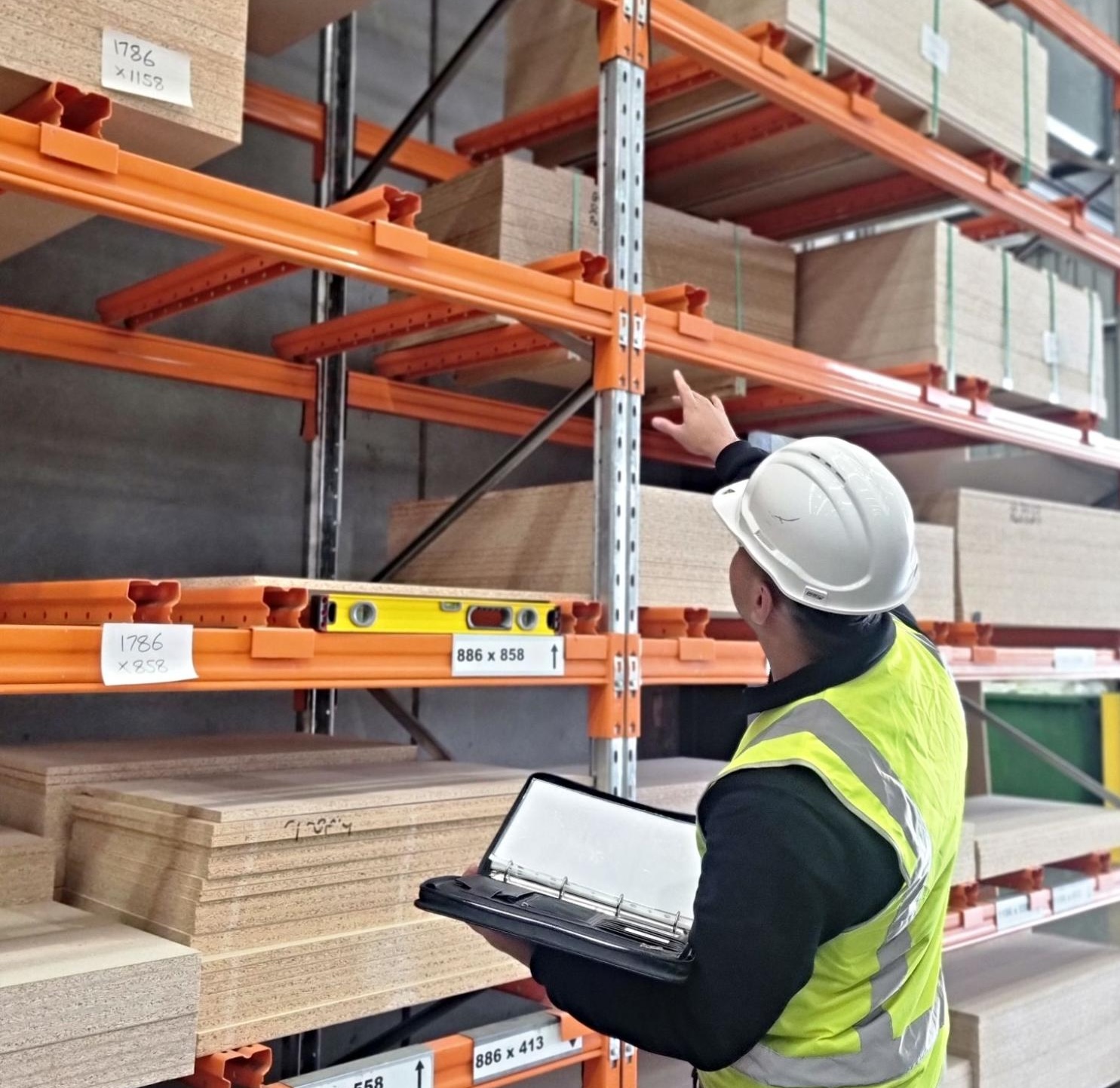
Daily Warehouse Maintenance Checklist
Daily checks should take no more than 15 to 20 minutes and can be carried out by any trained team member before operations begin.
- Walk all racking aisles and look for visible damage to uprights, beams, and base plates.
- Check for any dislodged or missing beam safety clips.
- Look for products overhanging shelf edges or stored beyond bay load limits.
- Check that all aisles and emergency exits are clear of obstructions.
- Inspect floor surfaces for spills, debris, or damage that could create a hazard.
- Verify that aisle line markings are visible and not obscured by pallets or equipment.
- Confirm that adequate lighting is operational throughout the warehouse.
- Report any damage, near-misses, or safety concerns to the supervisor before operations begin.
Any racking showing signs of damage should be taken out of service immediately. For guidance on what constitutes reportable damage, see our pallet racking hazards guide.
Weekly Warehouse Maintenance Checklist
Weekly checks build on the daily walk-through with a closer inspection of structural components, protection hardware, and safety accessories.
- Inspect all beam safety clips to confirm beams are locked to uprights and no clips are missing or damaged.
- Check all upright frames for bending, buckling, or impact damage at the base. Pay particular attention to corners and aisle entry points.
- Inspect column guards and post protection for damage from forklift impact. Replace any that are cracked, dislodged, or compressed.
- Check end row wrap barriers at the end of each aisle. Ensure they are securely anchored and undamaged.
- Examine base plates and floor anchors. Check for lifting, corrosion, or looseness.
- Inspect all beam connectors for deformation, cracking, or signs of weld failure.
- Check mesh deck panels for sagging, bowing, or damage that could affect load distribution.
- Inspect pallet support bars for deflection or damage, particularly under heavy or non-standard pallet loads.
- Verify that no modifications have been made to the racking configuration without supplier authorisation.
Monthly Warehouse Maintenance Checklist
Monthly checks cover items that require regular review to stay compliant and functional. These typically take 30 to 60 minutes depending on the size of your warehouse.
- Inspect all safe work load signs. Confirm they are permanent, corrosion-resistant, no smaller than A3, with font at least 20mm in height and clearly legible.
- Verify that load signs reflect the current racking configuration. Signs must be updated after any modifications
- Confirm all load signs display the required information: unit load limit, beam load limit, bay load limit, designer and manufacturer names, installation date, and customer name.
- Inspect aisle line markings. Refresh any that have faded or been worn away by forklift traffic.
- Check that PPE is available at all warehouse entry points, including high-vis vests and hardhats.
- Review the damage log from daily and weekly checks. Confirm all reported issues have been actioned.
- Inspect emergency lighting to confirm it is operational at all times.
- Check that upright protectors of at least 400mm height are in place at all gangway entry points, end of rows, and aisle cross-sections as required under AS4084-2023.
- Verify that backing mesh is installed behind any single-sided racking adjacent to pedestrian areas.
- Review any near-miss reports from the past month and assess whether changes to layout or protection hardware are needed.
Annual Warehouse Maintenance
The annual inspection is a formal requirement under AS4084-2023 and must be conducted by a Competent Person. This cannot be completed by an untrained internal team member. For full details, see our AS4084-2023 compliance guide.
A proper annual racking inspection takes a minimum of a few hours for a small facility and can span multiple days for a larger operation. Contact Global Industrial to arrange a professional racking inspection.
What to Do When You Find Damage
Not all damage is the same. Knowing when to repair, replace, or monitor is an important part of warehouse safety management.
Take out of service immediately if you find:
- Bent, buckled, or significantly deformed uprights
- Beams that are visibly bowed, cracked, or have dislodged safety clips
- Base plates that have lifted from the floor or lost their anchor points
- Any component showing signs of weld failure or cracking
- Racking modified without supplier authorisation
Monitor and report if you find:
- Minor scratches or paint damage to uprights with no structural deformation
- Slightly worn or faded load signage that is still legible
- Minor scuffs to column guards or end row barriers with no structural compromise
For repairs or replacement, Global Industrial stocks a full range of racking accessories including beam safety clips, column guards, end row wrap barriers, mesh decks, and pallet support bars. For structural repairs, contact our team for expert advice.
Frequently Asked Questions
How often does warehouse racking need to be inspected?
Under AS4084-2023, pallet racking must be formally inspected at least once every 12 months by a Competent Person. Informal safety inspections should be carried out daily and weekly by trained warehouse staff. High-traffic warehouses may require formal inspections every six months. See our AS4084-2023 compliance guide for full details.
Who can carry out a formal annual racking inspection?
The formal annual inspection must be conducted by a Competent Person, defined as someone who has worked in the industry as a racking designer, engineer, or installer. It cannot be completed by an untrained internal team member.
What should I do if I find damaged racking?
Take the affected racking out of service immediately. Do not load or continue using any racking showing signs of structural damage. Tag the area, document the damage, and contact your racking supplier for assessment before returning it to service.
What information is required on a racking load sign?
Under AS4084-2023, load signs must be permanent, corrosion-resistant, no smaller than A3, with font at least 20mm in height. They must display unit load limit, beam load limit, bay load limit, designer name, manufacturer name, supplier name, installation date, customer name, and maximum beam level heights.
Can I modify my racking without telling the supplier?
No. AS4084.2.2023 states no changes are allowed to the configuration or usage of the racking without the racking supplier’s authorisation. Unauthorised modifications can void compliance and create serious safety risks.
Keep Your Warehouse Safe and Compliant
Regular racking maintenance protects your team, your inventory, and your business. Browse our complete warehouse racking range and racking accessories including column guards, beam safety clips, end row barriers, load signs, and mesh decks, or contact our team to arrange a professional racking inspection.
Browse our warehouse racking