

A forklift clips an upright at low speed most days in a busy warehouse. Most of the time it’s a scuff. Occasionally it’s enough to bend the column, and a bent column under load is a structural problem, not a cosmetic one.
Good warehouse racking protection (i.e. barriers, bollards and guards) is what turns that daily low-speed contact into a non-event instead of a damaged frame.
Below, we cover the main types, where each one belongs, and what’s required to keep them compliant.
- Column guards, corner guards, end row wrap barriers and bollards each protect a different point in the warehouse.
- AS4084:2023 mandates upright protection at every aisle and gangway intersection.
- Finish matters: powder-coated orange for visibility indoors, hot-dipped galvanised for outdoor or corrosive environments.
- A guard that’s taken a hit has done its job but you should inspect it immediately and replace before the next impact.
Why Racking Protection Matters
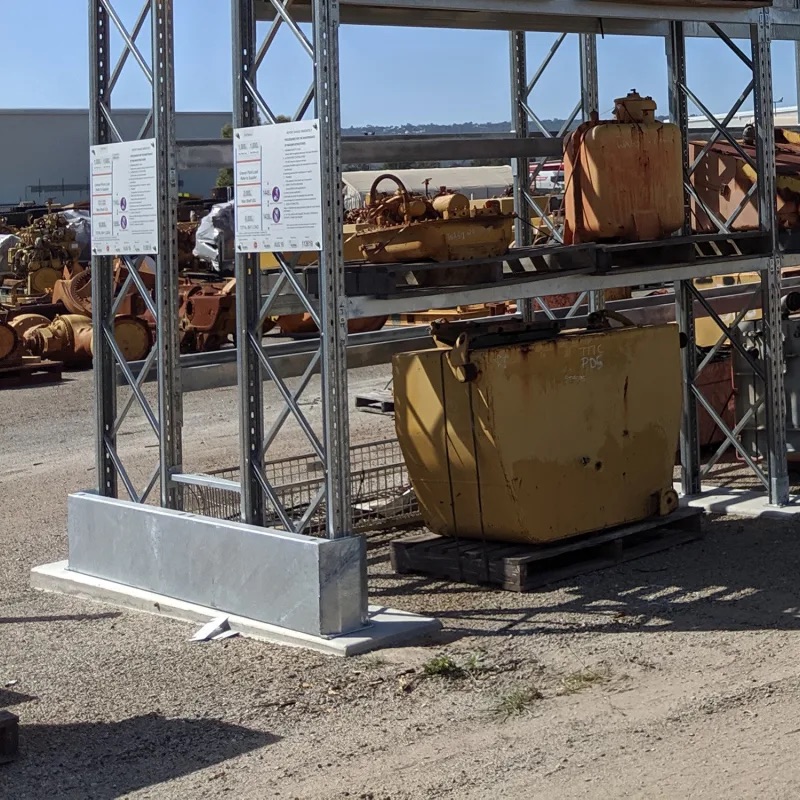
Pallet racking is only as strong as its uprights, and a damaged upright can reduce the load rating of an entire bay without any visible sign from the aisle. Under AS4084, businesses have a duty of care to protect racking at the points most likely to be struck, which is exactly where a loaded forklift is turning, reversing or lining up a pallet.
AS4084 is the Australian Standard for steel storage racking, covering how racking should be designed, installed, used, inspected and maintained.
The Main Types of Racking Protection
Column Guards and Corner Guards
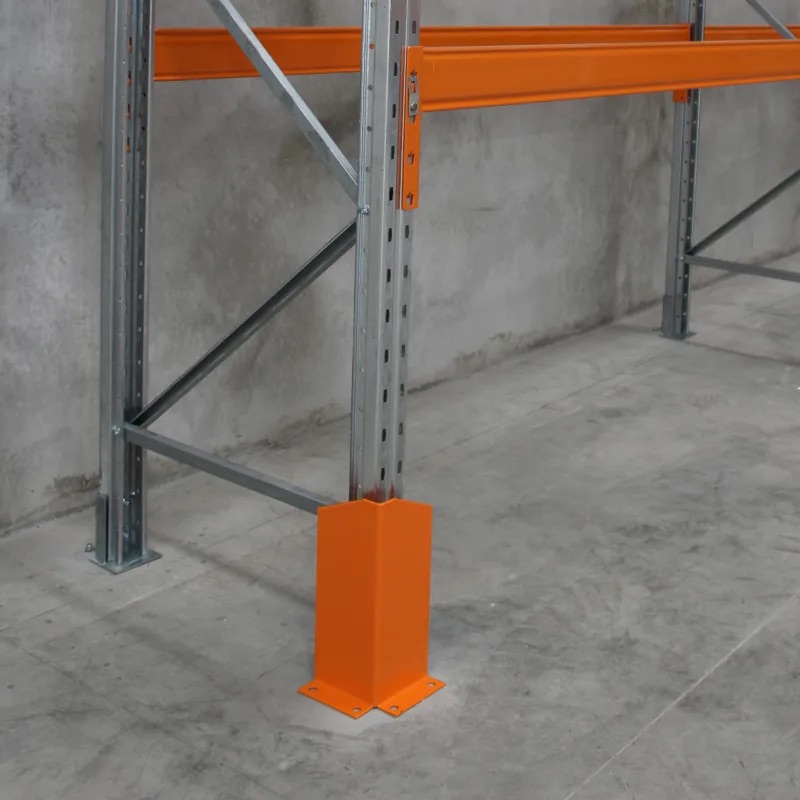
Column guards are U-shaped and wrap around mid-row uprights that sit in the path of a forklift travelling down an aisle. Corner guards are L-shaped and cover the exposed side of an upright at the end of a row, where forklifts are turning rather than travelling straight. Global’s Post Protection range covers both, in powder-coated orange or hot-dipped galvanised.
End Row Wrap Barriers
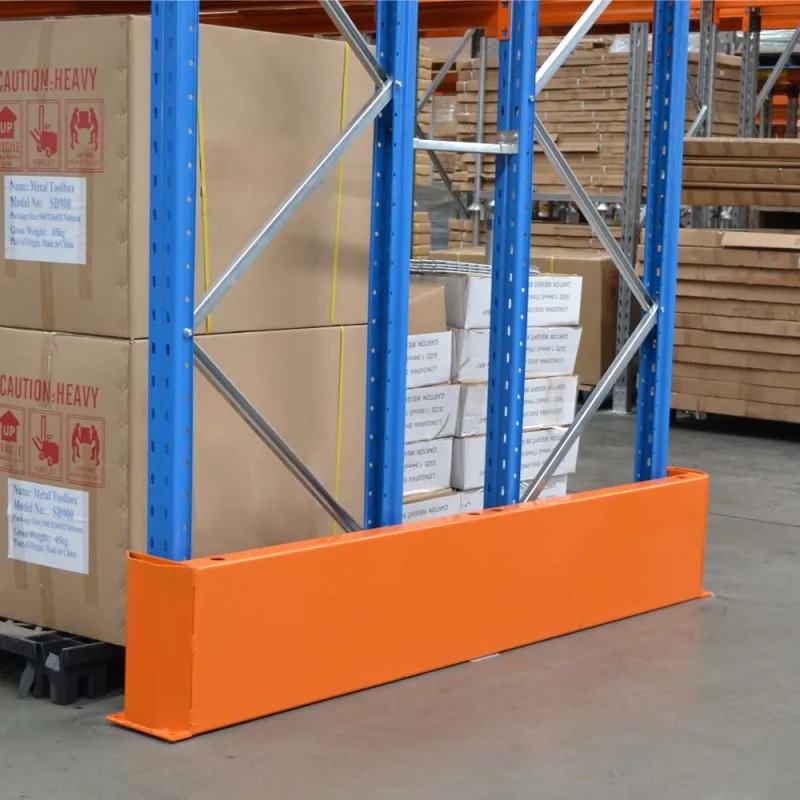
An End Row Wrap Barrier, also known as a rack end protector, is a full-depth steel panel that shields the entire end of a racking row, rather than just the upright itself. AS4084.1:2023 mandates protection at every aisle and gangway intersection, which is exactly where these barriers are used.
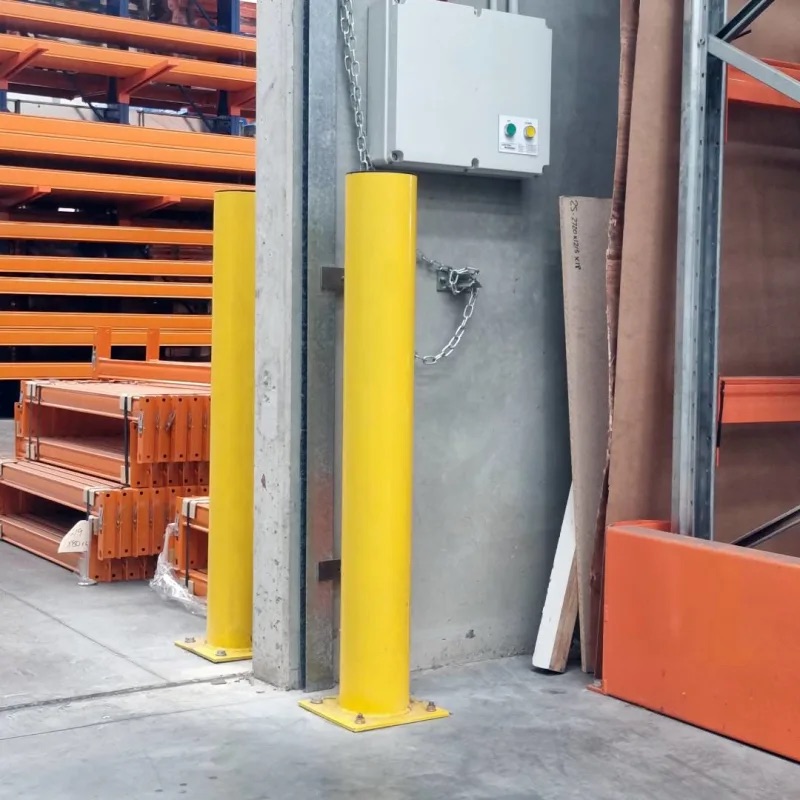
Bollards
Where the risk isn’t racking but doorways, personnel exits or plant, Steel Bollards do the job. These are surface-mounted steel posts that absorb impact away from vulnerable fixed points rather than the racking structure itself.
Stand-off Braces and Mesh Backing
Where pallet racking is installed alongside a pedestrian walkway, rear protection such as a stand-off brace with mesh backing is required to prevent stored goods from falling from the racking and injuring people on the opposite side. These solutions are part of our extensive range of racking accessories, designed to improve safety and functionality in your warehouse.

Where to Prioritise Protection First
Not every upright requires the same level of protection. Start by identifying where forklifts are most likely to turn, reverse or pass close to the racking structure.
- Aisle and gangway intersections. These areas are at higher risk of impact. Under AS 4084.1:2023, upright protectors are required at aisle and gangway intersections, as well as at the end upright of each racking run between cross-aisles. These are minimum protection requirements, so consider corner guards and end-of-row barriers to help protect exposed uprights from forklift collisions.
- Mid-row uprights on forklift travel paths. Medium-high risk: These uprights may be exposed to repeated impacts. Column guards can help reduce the risk of damage.
- Doorways, exits and fixed plant. Where vehicle movements bring forklifts close to racking or other structures, bollards can provide additional impact protection.
Where pallet racking backs onto a pedestrian walkway, the risk is different. Rather than forklift impact, the main concern is stored goods falling from the racking into the walkway. Mesh backing installed on a suitable stand-off frame helps contain stored goods and reduce the risk of injury to pedestrians on the opposite side.
Installation and Selection Tips
- Use the right anchors. M14 screw or M16 stud anchors at minimum, as M10 or M12 anchors don’t meet the structural requirement.
- Keep clearance. All rack protection must sit at least 60mm clear of the column, per AS4084.1:2023.
- Match the finish. Powder-coated orange for indoor visibility, or hot-dipped galvanised for cold storage, chemical or outdoor environments.
- Check clearance impact. Column guards can reduce bay entry width by up to 100mm, so confirm pallet fit before installing.
When Damaged Racking Needs to Be Inspected or Replaced
If a guard is dented, cracked or has sheared its anchors, it’s absorbed an impact that would otherwise have reached the upright, which is the point of fitting one. Inspect the racking behind it immediately for any force that bypassed the guard, and replace the damaged guard before it takes another hit unprotected.
Frequently asked questions
Why do I need racking protection barriers or bollards?
Forklift impact is one of the most common causes of racking damage, and a bent or cracked upright can reduce a bay’s load rating without any obvious sign. Barriers, bollards and guards absorb that impact before it reaches the structure, and AS4084 requires protection at the highest-risk points.
What’s the difference between a rack guard and a bollard?
A rack guard (column or corner guard) is installed around or alongside a racking upright to help protect it from forklift impacts. A bollard is a freestanding protective post, typically installed to safeguard doorways, exits, fixed plant or other vulnerable areas from vehicle collisions.
Where should racking protection go first in a warehouse?
Start with aisle and gangway intersections, exposed end uprights and other locations where forklifts frequently turn or manoeuvre close to the racking. AS 4084 specifies minimum upright protection requirements for certain locations. Next, assess mid-row uprights along forklift travel paths and racking positioned alongside pedestrian walkways, where additional protection may be needed to reduce the risk of falling goods.
Do racking guards and bollards need to be bolted down?
Yes. Guards and barriers require heavy-duty floor anchors (M14 screw or M16 stud anchors as a minimum) to stay in place during an impact. Lighter anchors don’t meet the structural requirement and won’t hold under a real collision.
When does damaged racking need to be inspected or replaced?
Any time a guard or barrier shows dents, cracks or sheared anchors, the racking behind it should be inspected straight away in case force bypassed the guard. The damaged guard itself should be replaced before it’s relied on for the next impact.
Protect Your Racking Today
Global Industrial stocks racking protection across Perth, Melbourne, Brisbane and Sydney, with click & collect available from any of the four warehouses. Shop Post Protection column and corner guards, End Row Wrap Barriers, and Steel Bollards, or browse the full racking accessories range.
Talk to your local team to confirm the right anchors and coverage for your site.