

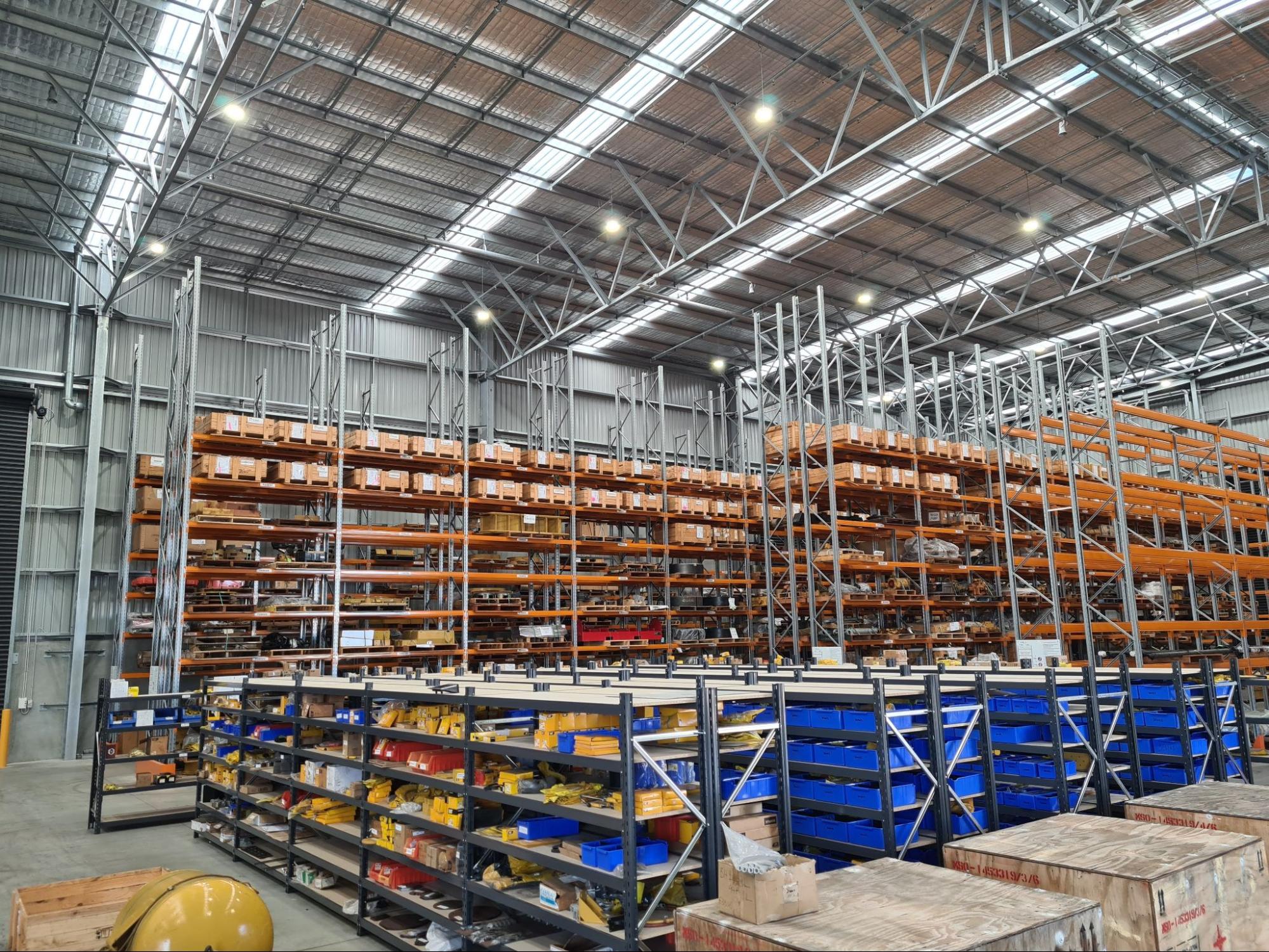
Warehouse managers across Australia and New Zealand are facing a familiar problem in 2026. Stock levels are climbing, aisles are full, and efficiency is slipping. But moving premises feels costly, disruptive, and complicated.
Industrial property markets aren’t making it any easier. Vacancy rates in Sydney, Melbourne, and Perth are sitting near historic lows, often under 3%. Prime industrial rents are set to stay high. Relocating to a bigger facility isn’t as straightforward as it used to be.
Instead, many operations teams are choosing warehouse optimisation – upgrading their current facility to unlock hidden storage space. Adding a mezzanine floor can effectively double your footprint. Switching to high-density racking improves warehouse efficiency without the upheaval of a move. Retrofitting is faster, more cost-effective, and far less disruptive in the long term than relocating.
This guide walks through the real costs of relocating or optimising your warehouse, so you can decide which is the smarter option for you.
The hidden costs of moving a warehouse
It’s easy to get caught up in comparing the rent on your old warehouse with the new one. In reality, moving can bring hidden costs that eat into your budget long before the first pallet leaves your old site.
The make-good clause
Almost every commercial lease in Australia has a ‘make good’ requirement. This clause requires you to return the warehouse to its original condition. ‘Making good’ often involves stripping out racking and barriers, patching anchor holes, grinding floors, and removing office partitions.
Cost: For a 2,000sqm warehouse, professional defitting can cost between $30,000 and $50,000. That’s a significant outlay with no direct operational benefit.
Double rent during the transition
You can’t simply close one warehouse on Friday and start up the next Monday. Often, rent overlaps for 4 to 8 weeks while you install racking, IT systems, and safety zones at the new site.
Cost: At $15,000 per month rent, a 6-week overlap adds roughly $25,000 in duplicate expenses.
Operational downtime and staff retention
Your highest moving cost is lost productivity. Even a few days of reduced activity impacts cash flow and client commitments. Moving further out can also put pressure on your team. Long commutes risk losing experienced staff, forcing extra spending on recruitment and training.
How to optimise without moving
If you’re staring at full aisles and wondering how to get more out of your warehouse, the answer might not be a bigger building. Instead, it’s making better use of the one you’ve got. Warehouse optimisation focuses on retrofitting your current space to unlock capacity, improve workflow, and boost efficiency without the disruption of relocating.
There are two primary ways to do this: go up and increase density. Each delivers measurable gains and, when combined, can transform a cramped warehouse into a streamlined operation.
Go up, not out with mezzanines
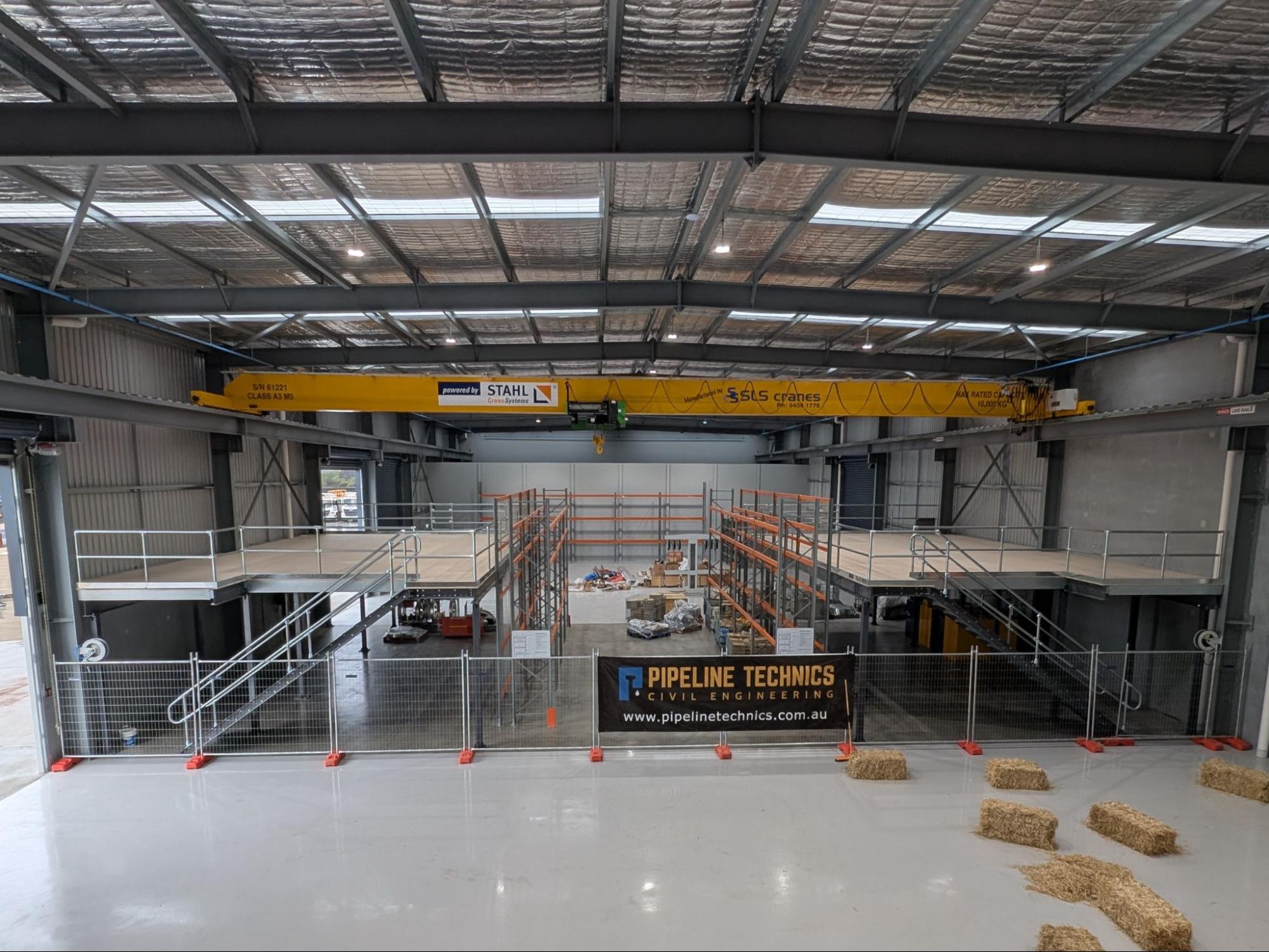
One of the quickest ways to multiply your warehouse storage is by going vertical. Mezzanine floors allow you to essentially double your ground footprint without moving a single pallet outside. These intermediate floors are ideal for picking, packing, storage, or light assembly areas. And they integrate seamlessly with your existing layout.
Global Industrial offers modular mezzanine systems you can tailor to your ceiling height, load requirements, and workflow needs. By making use of vertical space, you reduce congestion on the warehouse floor. You also free up room for forklifts and other equipment to move safely. This approach improves operational efficiencies by separating different work functions across levels while keeping everything under one roof.
Increase density with high-density racking systems
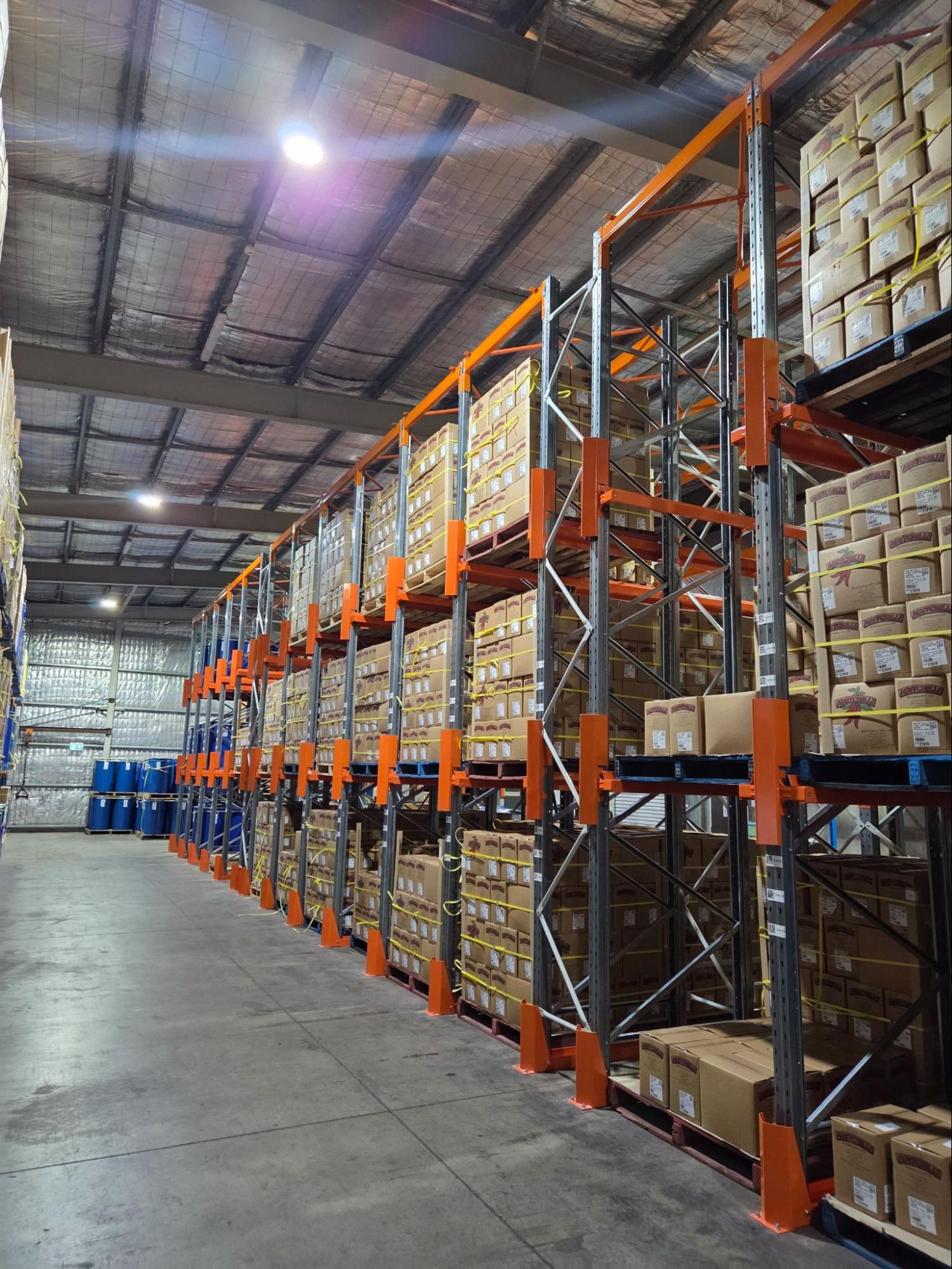
The other powerful way to squeeze more out of your warehouse is by upgrading your storage system. If you’re still using traditional selective pallet racking, consider switching to double-deep or drive-in racking. These storage solutions can increase storage capacity by up to 70% within the same footprint.
High-density racking also improves efficiency when paired with thoughtful warehouse layout design for omni-channel order fulfilment. It allows for better inventory management, easier rotation of stock, and safer storage of heavier or bulkier items. And because these systems are modular, you can adapt them as your business grows or your stock levels change.
Relocating vs optimising a warehouse
When freeing up warehouse space, moving to a bigger facility seems simple on paper. The reality is more complex. Relocation involves downtime, staff disruption, double rent, IT migration, and make-good costs that quickly snowball into significant costs.
Optimisation, on the other hand, lets you stage upgrades like mezzanines, high-density racking, or narrower aisles. These improvements deliver immediate capacity gains, minimise operational risk, and avoid the upheaval of a full move. This makes it a more pragmatic and cost-effective approach for most warehouses in 2026.
Make the most of your current space
Relocating a warehouse remains an option. But for most businesses in 2026, optimising your current facility is the smarter move. Retrofitting lets you unlock hidden capacity, improve workflow, and limit disruption, all while keeping costs in check. Assess your space, plan targeted upgrades, and you can get more out of your warehouse without packing a single pallet.
Global Industrial are experts in warehouse storage efficiency in Australia. For expert advice on making the most of your existing warehouse, get in touch.
FAQs
Q: Is it cheaper to relocate or extend a warehouse?
A: Targeted upgrades to your existing warehouse are almost always cheaper than relocating. Moving involves double rent, lease make-good, IT migration, and downtime costs that add up quickly. Retrofits provide immediate capacity gains with lower operational impact.
Q: How much does a warehouse mezzanine floor cost?
A: Costs vary depending on floor size, load capacity, and structural complexity. Factors include installation, access stairs or lifts, safety barriers, and integration with existing racking or workflow. Get in touch with the Global Industrial team for a tailored quote.
Q: How can I increase warehouse capacity without moving?
A: You can increase your warehouse capacity by retrofitting your current space. Install mezzanine floors or upgrade to high-density racking, like double-deep or drive-in systems. Combined, these approaches reclaim unused space and improve operational efficiency without relocating.
Get in touch with Global Industrial to see how you can optimise your existing warehouse space. Contact Us Today